Best Electric Go-Karts for Kids
The best electric go-karts for kids — from the Razor Dune Buggy to pro-style 24V karts. Find the right fit by age, speed, and available space.
Affiliate Disclosure
This page contains affiliate links. As an Amazon Associate, PowerWheels HQ may earn a commission on qualifying purchases at no extra cost to you. Our reviews and recommendations are editorially independent.
Looking for the best electric go-karts for kids? Our top pick is the Radio Flyer Ultimate Go-Kart. It leads this guide as best overall quality with a 4.6/5 rating. The full comparison and the tradeoffs are below.
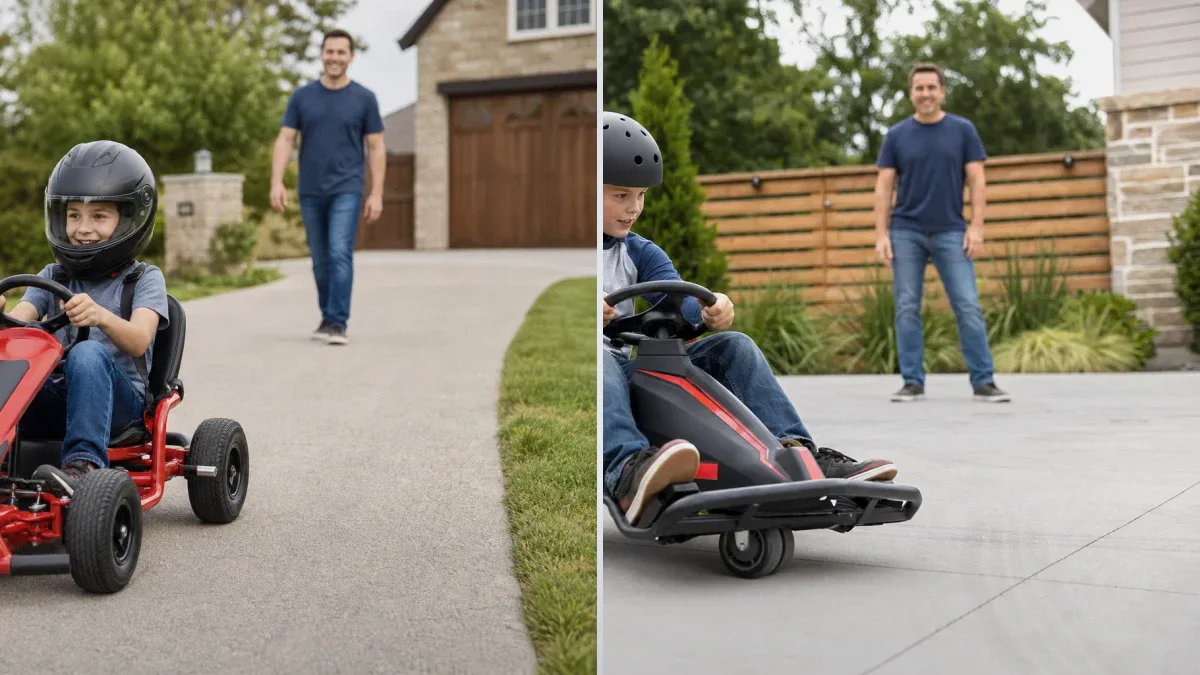
Electric go-karts are a different category from your typical Power Wheels. They sit lower to the ground, corner with more feedback, and put kids in a driving position that actually feels like driving. The steering wheel has weight to it. The frame doesn't flex over bumps. When a kid climbs out of a proper go-kart, they've had an experience — not just a ride.
That said, go-karts are not for every yard or every kid. They need room to stretch out — a driveway, a cul-de-sac, a flat backyard with some length to it. The fun comes from the arc, the turn-in, the small corrections at speed. A 6-by-10 patio won't cut it. If space is tight, a smaller ride-on may honestly serve your kid better.
Speed range varies enormously across this category. Entry-level models like the Razor Dune Buggy top out around 9 mph, which is plenty for a 5-year-old but will bore a 10-year-old within a week. The upper end of the electric kart market pushes 15–20 mph, and those models require real respect — a helmet is non-negotiable, knee and elbow pads are strongly recommended, and parental supervision until the kid has proven they can handle the speed.
We've covered the full range here: a beginner buggy for kids just getting started, a drift-capable mid-range kart, a 24V performance model, the Radio Flyer flagship, and a pedal kart for younger children who aren't ready for electric power.
Quick Comparison
Razor Dune Buggy Electric Ride-On
Razor
Best Beginner Go-Kart
- Voltage
- 12V
- Seats
- 1
- Ages
- 7–12
- Price
- $150–$200
Razor Ground Force Drifter Electric Go-Kart
Razor
Best for Drift Fun
- Voltage
- 12V
- Seats
- 1
- Ages
- 8–13
- Price
- $220–$280
Best Choice Products 24V Kids Electric Go-Kart
Best Choice Products
Best Budget 24V Kart
- Voltage
- 24V
- Seats
- 1
- Ages
- 6–10
- Price
- $200–$320
Radio Flyer Ultimate Go-Kart
Radio Flyer
Best Overall Quality
- Voltage
- 24V
- Seats
- 1
- Ages
- 3–8
- Price
- $350–$450
Step2 Whisper Ride Buggy Push Car
Step2
Best for Toddlers
- Voltage
- N/A (push)
- Seats
- 1
- Ages
- 1.5–5
- Price
- $60–$90
| Product | Best For | Specs | Price | Rating |
|---|---|---|---|---|
Razor Dune Buggy Electric Ride-On Razor | Best Beginner Go-Kart | 12V · 1 seat Ages 7–12 | $150–$200 | 4.2 |
Razor Ground Force Drifter Electric Go-Kart Razor | Best for Drift Fun | 12V · 1 seat Ages 8–13 | $220–$280 | 4.4 |
Best Choice Products 24V Kids Electric Go-Kart Best Choice Products | Best Budget 24V Kart | 24V · 1 seat Ages 6–10 | $200–$320 | 4.1 |
Radio Flyer Ultimate Go-Kart Radio Flyer | Best Overall Quality | 24V · 1 seat Ages 3–8 | $350–$450 | 4.6 |
Step2 Whisper Ride Buggy Push Car Step2 | Best for Toddlers | N/A (push) · 1 seat Ages 1.5–5 | $60–$90 | 4.3 |
Prices are approximate and subject to change. Always verify current pricing before purchasing.
Our Picks — In Detail
Razor Dune Buggy Electric Ride-On
Razor
12VSeats
1Ages
7–12Price
$150–$200
The Dune Buggy is the entry point to the go-kart category — a low-slung, open frame with a chain-driven motor that tops out around 9 mph. It handles grass and packed dirt reasonably well and is genuinely easy for new drivers to manage. Build quality is solid for the price point.
Pros
- Affordable entry into the go-kart category
- Handles grass and gravel better than most karts
- Simple controls kids can learn in minutes
Cons
- 12V motor limits top speed to ~9 mph
- No adjustable seat — fit is fixed
Razor Ground Force Drifter Electric Go-Kart
Razor
12VSeats
1Ages
8–13Price
$220–$280
The Drifter adds polyurethane rear wheels designed to break traction on smooth surfaces, letting kids initiate controlled drifts. On pavement it's genuinely entertaining for older kids. Top speed is around 12 mph, and the low center of gravity makes it feel planted even while sliding.
Pros
- Drift rear wheels deliver an experience other karts can't match
- Foot-operated accelerator feels more realistic than trigger controls
- Sturdy welded steel frame
Cons
- Drifting only works on smooth pavement — useless on grass
- Battery run time drops quickly at full throttle
Best Choice Products 24V Kids Electric Go-Kart
Best Choice Products
24VSeats
1Ages
6–10Price
$200–$320
Best Choice Products packs 24V power into an affordable frame, giving kids noticeably more acceleration than 12V competitors. The adjustable seat extends the usable age range, and the roll bar adds reassurance for parents. Assembly takes about an hour.
Pros
- 24V motor delivers real acceleration
- Adjustable seat fits a wider age range
- Roll bar adds structural and safety confidence
Cons
- Plastic components show wear faster than steel-framed karts
- Customer support can be slow for parts
Radio Flyer Ultimate Go-Kart
Radio Flyer
24VSeats
1Ages
3–8Price
$350–$450
Radio Flyer's flagship kart is polished in ways budget options aren't — a quiet belt-driven motor, a fully adjustable seat that grows with the child, and smooth throttle response that doesn't lurch at low speed. Built for the 3–8 crowd, it excels at that age window. Top speed around 5 mph keeps it genuinely age-appropriate.
Pros
- Premium build quality with thoughtful finishing details
- Quiet belt drive is neighborhood-friendly
- Adjustable seat spans several years of use
Cons
- 5 mph top speed will feel slow to older or more experienced riders
- Higher price point than comparable go-karts
Step2 Whisper Ride Buggy Push Car
Step2
N/A (push)Seats
1Ages
1.5–5Price
$60–$90
For kids under 4 who want the go-kart shape without the electric motor, the Step2 Whisper Ride is a practical pick. Parents push from behind using the built-in handle while the child steers. It's a low-stress intro to the concept of steering in a kart-style vehicle.
Pros
- Safe and appropriate for children as young as 18 months
- Parent push handle gives full speed control
- Lightweight and easy to store
Cons
- No motor — limited excitement for kids over 4
- Outgrown quickly as kids approach preschool age
What to Look For
Voltage (6V / 12V / 24V)
Higher voltage means more power, higher top speed, and better terrain handling. Choose based on your child's age, size, and where they'll ride. 12V is the most popular choice for ages 3–7.
Number of Seats
Single-seat models work for one child; two-seat designs are great for siblings or friends. Two-seaters often put more strain on the motor, so look for adequate power.
Terrain
Most 12V ride-ons handle flat grass and hard surfaces. If you have hills, rough grass, or gravel, look for 24V models with high-traction tires.
Safety Features
Look for seat belts, parental lockout switches, low/high speed settings, and parental remote controls — especially for younger or first-time riders.
Battery & Charging
Check battery life (usually 1–2 hours for 12V) and charge time (8–18 hours). Some premium models offer faster charging or higher-capacity batteries.