Best Power Wheels for 5-Year-Olds
Our top picks for power wheels and ride-on toys for 5-year-olds. We compare 12V and 24V options on speed, terrain, durability, and whether they'll last into age 7.
Affiliate Disclosure
This page contains affiliate links. As an Amazon Associate, PowerWheels HQ may earn a commission on qualifying purchases at no extra cost to you. Our reviews and recommendations are editorially independent.
Looking for the best power wheels for 5-year-olds? Our top pick is the Power Wheels Dune Racer Extreme. It leads this guide as best overall with a 4.4/5 rating. The full comparison and the tradeoffs are below.
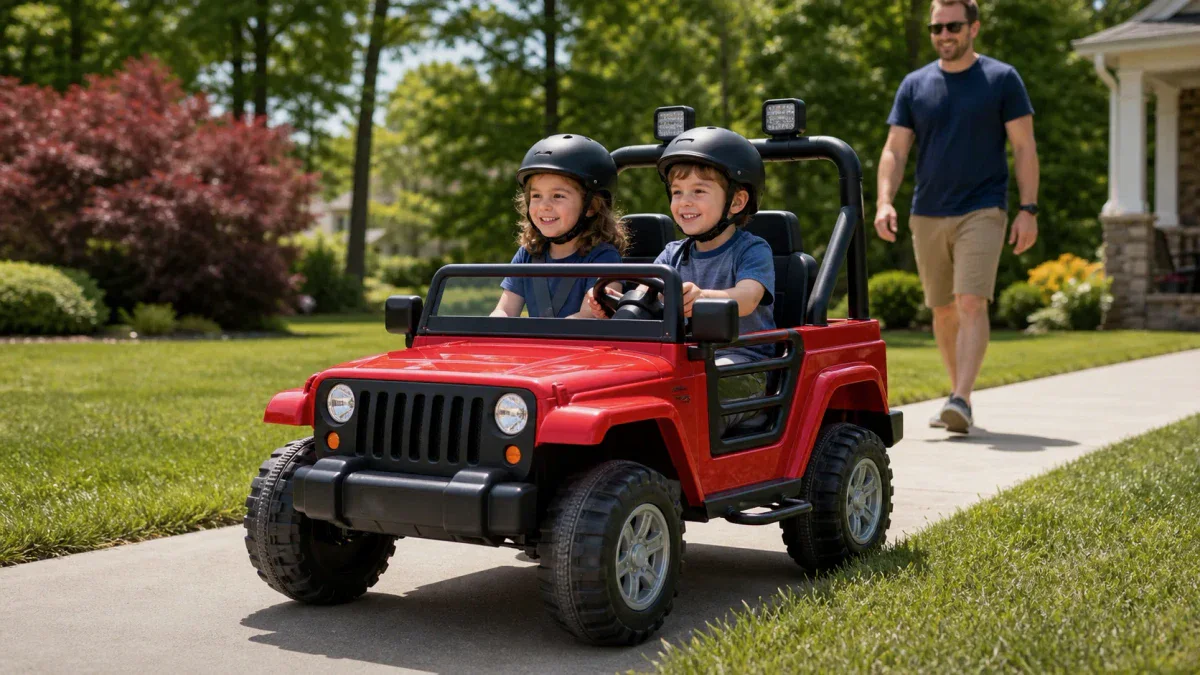
Five is arguably the best age to buy a ride-on toy. Old enough to handle real 12V speed without panicking, coordinated enough to steer through a turn without assistance, and young enough that the experience of driving their own vehicle still registers as genuinely magical. The window where all three of those things are true simultaneously is shorter than you think — and a good ride-on bought at 5 will earn real use through age 7 or 8 if you pick correctly.
The core decision at this age is voltage. Most 5-year-olds are ready for 12V. The standard Power Wheels top speed of 5 mph is appropriate, handles moderate outdoor terrain, and the selection at 12V is unmatched. But if your kid is on the taller or heavier side, already confident and bored easily, or your yard has any real slope to it, 24V is worth the extra investment now rather than replacing a 12V vehicle in a year.
Parental remote control is still a useful feature but less essential than at age 3 — a 5-year-old who's been driving for two years understands the controls. What matters more at this age: weight limit headroom so they don't hit the ceiling at age 6, durability for confident use, speed settings that can grow with them, and a style they'll actually still want to be seen in at age 7. No 5-year-old wants to be caught driving something that looks like it belongs in a nursery.
Terrain is worth thinking about honestly. Flat maintained grass or driveway: a quality 12V is completely sufficient. Actual inclines, thick grass, gravel, or a kid who drives through everything rather than around it: the 24V models in this list will serve you considerably better. The performance difference on real terrain is significant, not marginal.
Quick Comparison
Power Wheels Dune Racer Extreme
Power Wheels
Best Overall
- Voltage
- 12V
- Seats
- 2
- Ages
- 3–7
- Price
- $250–$330
Power Wheels Ford F-150 Raptor
Power Wheels
Best Truck
- Voltage
- 12V
- Seats
- 1
- Ages
- 3–7
- Price
- $200–$280
Peg Perego Polaris RZR
Peg Perego
Best Premium 24V
- Voltage
- 24V
- Seats
- 2
- Ages
- 3–8
- Price
- $400–$550
Best Choice Products 24V UTV Side-by-Side
Best Choice Products
Best Budget 24V
- Voltage
- 24V
- Seats
- 2
- Ages
- 3–8
- Price
- $200–$300
Power Wheels Jeep Wrangler
Power Wheels
Best Classic Two-Seater
- Voltage
- 12V
- Seats
- 2
- Ages
- 3–7
- Price
- $230–$320
| Product | Best For | Specs | Price | Rating |
|---|---|---|---|---|
Power Wheels Dune Racer Extreme Power Wheels | Best Overall | 12V · 2 seats Ages 3–7 | $250–$330 | 4.4 |
Power Wheels Ford F-150 Raptor Power Wheels | Best Truck | 12V · 1 seat Ages 3–7 | $200–$280 | 4.3 |
Peg Perego Polaris RZR Peg Perego | Best Premium 24V | 24V · 2 seats Ages 3–8 | $400–$550 | 4.6 |
Best Choice Products 24V UTV Side-by-Side Best Choice Products | Best Budget 24V | 24V · 2 seats Ages 3–8 | $200–$300 | 4.0 |
Power Wheels Jeep Wrangler Power Wheels | Best Classic Two-Seater | 12V · 2 seats Ages 3–7 | $230–$320 | 4.4 |
Prices are approximate and subject to change. Always verify current pricing before purchasing.
Our Picks — In Detail
Power Wheels Dune Racer Extreme
Power Wheels
12VSeats
2Ages
3–7Price
$250–$330
The open buggy format is what separates the Dune Racer from the crowd. There's no roof, no enclosure, and nothing between your 5-year-old and the entire yard — which is exactly what a confident 5-year-old wants. Wide stance keeps it stable through corners, high-traction tires handle real outdoor surfaces, and the two-seat layout means a friend or sibling can come along. Power Wheels build quality means this lasts through age 7 without drama.
Pros
- Open buggy design appeals to adventurous 5-year-olds
- Wide stance makes it difficult to tip
- Two-seat layout accommodates siblings or friends
- High-traction tires handle grass and uneven terrain
Cons
- No roof means sun and weather exposure
- 12V tops at 5 mph — may feel slow by age 7
- No parental remote option
Power Wheels Ford F-150 Raptor
Power Wheels
12VSeats
1Ages
3–7Price
$200–$280
The licensed F-150 Raptor styling is the reason this is in every driveway — the grille, the bed graphics, and the badge are all accurate enough that the parent who drives a real Raptor will stop and admire it. High/low speed settings are the practical draw: 2.5 mph for a kid still finding their confidence on turns, 5 mph when they've earned the fast setting. Under-hood storage holds exactly one rock and a juice box, which your kid will treat as critical cargo.
Pros
- Authentic licensed Raptor styling and detailing
- High/low speed settings for progressive learning
- Reliable Power Wheels construction
- Under-hood storage compartment adds play value
Cons
- Single seat — no passenger option
- No parental remote
- 5 mph maximum leaves limited headroom for older kids
Peg Perego Polaris RZR
Peg Perego
24VSeats
2Ages
3–8Price
$400–$550
If your yard has any real terrain, this is the honest recommendation. The 24V dual-motor system handles hills and thick grass that make 12V motors audibly unhappy. Three speed settings mean you start a 5-year-old at 2.5 mph and dial up to 7 mph when they're ready — over a span of years, not weeks. Italian-engineered motors and rubber tires make this the vehicle that survives multiple children.
Pros
- 24V handles terrain 12V cannot — hills, thick grass, gravel
- Three speed settings (2.5–7 mph) grow with the child
- Rubber tires grip far better than plastic wheels
- Exceptional build quality outlasts multiple kids
Cons
- Significantly higher price than 12V alternatives
- Up to 18-hour charge time requires advance planning
- Heavier and harder to store
Best Choice Products 24V UTV Side-by-Side
Best Choice Products
24VSeats
2Ages
3–8Price
$200–$300
The entry point into 24V without the Peg Perego price tag. For a 5-year-old on flat to moderate terrain, the 24V motor provides noticeably more punch at a cost that doesn't require a separate budget conversation. Two seats, a parental remote, and Bluetooth speakers are standard on most BCP UTV configurations. Build quality is lighter than Peg Perego but delivers meaningful performance at an honest price.
Pros
- 24V performance at a mid-range price point
- Parental remote and Bluetooth typically included
- Two-seat layout for siblings or friends
- Good value for families not ready for premium pricing
Cons
- Lighter construction than name-brand competitors
- Motor less robust on sustained rough terrain use
- Remote range tends to be limited (~20 feet)
Power Wheels Jeep Wrangler
Power Wheels
12VSeats
2Ages
3–7Price
$230–$320
The most recognized ride-on ever made, and for the 5-year-old demographic it still earns its reputation. The wide bench genuinely fits two average kids side by side. Dual-motor 12V handles mixed surfaces without protest. At 5, kids understand Jeep before most other brands, and the Wrangler's peer appeal holds up through age 7.
Pros
- Wide two-seat bench actually fits two kids
- Dual-motor 12V handles varied outdoor terrain
- Universally recognized styling
- Strong parts availability and resale value
Cons
- No parental remote control
- 5 mph top speed — limited headroom for older kids
- Assembly takes 60–90 minutes
What to Look For
Voltage (6V / 12V / 24V)
Higher voltage means more power, higher top speed, and better terrain handling. Choose based on your child's age, size, and where they'll ride. 12V is the most popular choice for ages 3–7.
Number of Seats
Single-seat models work for one child; two-seat designs are great for siblings or friends. Two-seaters often put more strain on the motor, so look for adequate power.
Terrain
Most 12V ride-ons handle flat grass and hard surfaces. If you have hills, rough grass, or gravel, look for 24V models with high-traction tires.
Safety Features
Look for seat belts, parental lockout switches, low/high speed settings, and parental remote controls — especially for younger or first-time riders.
Battery & Charging
Check battery life (usually 1–2 hours for 12V) and charge time (8–18 hours). Some premium models offer faster charging or higher-capacity batteries.