Best Ride-On Cars for Twins and Siblings
Two-seater ride-ons vs. buying two separate vehicles — the honest trade-off for families with twins or close-in-age siblings. Best picks for shared riding and solo riding side-by-side.
Affiliate Disclosure
This page contains affiliate links. As an Amazon Associate, PowerWheels HQ may earn a commission on qualifying purchases at no extra cost to you. Our reviews and recommendations are editorially independent.
Looking for the best ride-on cars for twins and siblings? Our top pick is the Jeep Wrangler 2-Seater 12V. It leads this guide as best two-seater overall — the benchmark with a 4.6/5 rating. The full comparison and the tradeoffs are below.
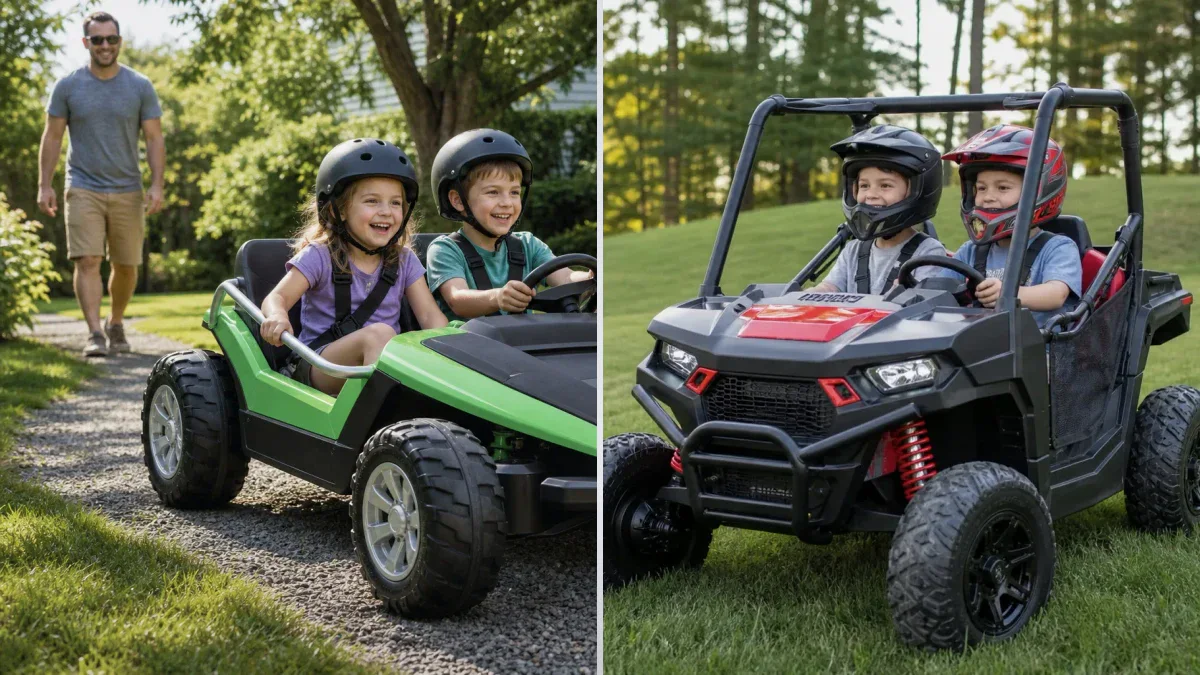
The first thing every parent of twins or close-in-age siblings thinks when buying a ride-on: get a two-seater, problem solved. One vehicle, both kids, done.
The second thing they think, six months later, is: I should have bought two separate vehicles.
This is not universal — two-seaters work great for some families. But before you default to the two-seater assumption, it's worth understanding the actual dynamics, because the situation on the ground is often different from what the product listing implies.
The Two-Seater Problem No One Mentions
Siblings fight over the steering wheel. This is the single most consistent complaint in two-seater ride-on reviews, and it's not a product flaw — it's human nature. One child wants to go right; the other wants to go left. The older sibling takes over. The younger sibling cries. The parents have paid $250 to create a new source of conflict.
This doesn't happen with two separate vehicles. With two separate vehicles, each child has their own domain. They can race, they can follow each other, they can ignore each other entirely. The argument over who's in charge disappears.
Two separate entry-level ride-ons often cost $80-120 each — so $160-240 total — which is comparable to or less than a quality two-seater. The "two-seater is more economical" logic doesn't always hold up under scrutiny.
When Two-Seaters Are the Right Call
Two-seaters make genuine sense in specific situations. If one child is significantly younger and can't drive independently yet, a two-seater lets the older child drive while the younger one rides along. If your yard is small and two separate vehicles would create more traffic than space allows, a two-seater streamlines things. If one child is timid and genuinely wants to ride but not drive, a two-seater accommodates that.
They also work well when one child legitimately doesn't want to drive — when you have an enthusiastic driver sibling and an observer sibling. Those families have a great experience with two-seaters. The problems arise when both kids want to drive, because that conflict is going to happen every single session.
Weight Limits Matter More on Two-Seaters
A 12V two-seater has a combined weight limit — typically 130 lbs for most standard two-seaters. That sounds generous until you realize two 7-year-olds weigh around 110-120 lbs combined. It's fine now, but the vehicle's usable life shortens significantly as the kids grow. Single-seat vehicles rated for 65-75 lbs individually often give each child a longer ownership window.
Voltage Considerations for Two Riders
Two kids on a 12V vehicle means significantly more load than the motor was optimized for. Most two-seat 12V ride-ons handle this adequately on flat surfaces, but grass performance and incline performance suffer more than the single-rider specs suggest. If your yard has any real terrain, consider whether the two-seat 12V can actually handle it with both kids aboard — or if you need a 24V two-seater to get the performance you expect.
The Age Gap Factor
Twins are straightforward: same age, same developmental stage, similar capabilities. Close-in-age siblings (say, a 4-year-old and a 2.5-year-old) present a harder call. The developmental gap may mean the younger child can't yet drive safely, while the older child is ready for independent control. A two-seater addresses this gap better than two separate vehicles at that specific developmental moment — but it's a temporary solution, and in 12-18 months you may find both kids wanting to drive separately anyway.
Quick Comparison
Jeep Wrangler 2-Seater 12V
Power Wheels
Best two-seater overall — the benchmark
- Voltage
- 12V
- Seats
- 2
- Ages
- 3-7
- Price
- $280-$380
Kids 2-Seater SUV 12V with Parental Remote
Best Choice Products
Best budget two-seater with remote for younger siblings
- Voltage
- 12V
- Seats
- 2
- Ages
- 2-5
- Price
- $130-$200
24V Kids Ranger Two-Seater UTV
Peg Perego
Best premium two-seater for active outdoor families
- Voltage
- 24V
- Seats
- 2
- Ages
- 3-8
- Price
- $380-$520
Power Wheels Dune Racer 12V
Power Wheels
Best mid-range two-seater with race car styling
- Voltage
- 12V
- Seats
- 2
- Ages
- 3-7
- Price
- $200-$280
Power Wheels Wild Thing 12V
Power Wheels
Best separate-vehicle option — buy two of these
- Voltage
- 12V
- Seats
- 1
- Ages
- 3-7
- Price
- $130-$180
| Product | Best For | Specs | Price | Rating |
|---|---|---|---|---|
Jeep Wrangler 2-Seater 12V Power Wheels | Best two-seater overall — the benchmark | 12V · 2 seats Ages 3-7 | $280-$380 | 4.6 |
Kids 2-Seater SUV 12V with Parental Remote Best Choice Products | Best budget two-seater with remote for younger siblings | 12V · 2 seats Ages 2-5 | $130-$200 | 4.2 |
24V Kids Ranger Two-Seater UTV Peg Perego | Best premium two-seater for active outdoor families | 24V · 2 seats Ages 3-8 | $380-$520 | 4.8 |
Power Wheels Dune Racer 12V Power Wheels | Best mid-range two-seater with race car styling | 12V · 2 seats Ages 3-7 | $200-$280 | 4.4 |
Power Wheels Wild Thing 12V Power Wheels | Best separate-vehicle option — buy two of these | 12V · 1 seat Ages 3-7 | $130-$180 | 4.3 |
Prices are approximate and subject to change. Always verify current pricing before purchasing.
Our Picks — In Detail
Jeep Wrangler 2-Seater 12V
Power Wheels
12VSeats
2Ages
3-7Price
$280-$380
The gold standard for two-seat ride-ons. Power Wheels reliability, Jeep licensing, and a genuine two-seat configuration with adequate weight capacity. If you're going two-seater, this is where to start. Handles flat grass adequately, performs well on pavement. The most trusted name in a two-seater form.
Pros
- Power Wheels reliability and parts availability
- Jeep licensed — iconic styling both kids will love
- Genuine two-seat configuration with room for real kids
Cons
- Both-kids-want-to-steer conflict is universal to two-seaters
- 12V shows its limits on steep grass with two riders aboard
Kids 2-Seater SUV 12V with Parental Remote
Best Choice Products
12VSeats
2Ages
2-5Price
$130-$200
A budget two-seater that includes a parental remote — which makes it specifically well-suited for situations where one child is old enough to drive and one isn't. The parent can override when the younger sibling grabs the wheel. Lower price means lower stakes if the two-seater experiment doesn't pan out for your family.
Pros
- Parental remote handles the mixed-age sibling scenario well
- Budget price reduces risk of the "should have bought two" regret
- Two seats at an accessible entry point
Cons
- Build quality reflects the price
- 12V struggles with two riders on soft grass
24V Kids Ranger Two-Seater UTV
Peg Perego
24VSeats
2Ages
3-8Price
$380-$520
The two-seater that actually handles terrain with two riders aboard. 24V solves the weight-load performance problem that plagues 12V two-seaters on grass and slopes. If you're investing in a two-seater, this is the version that won't disappoint you in the yard. Premium price, premium performance.
Pros
- 24V handles two-rider load on grass and slopes without stalling
- Peg Perego build quality lasts years of shared use
- Generous weight capacity for bigger kids
Cons
- Most expensive option in the category
- Still doesn't solve the two-kids-fighting-over-steering problem
Power Wheels Dune Racer 12V
Power Wheels
12VSeats
2Ages
3-7Price
$200-$280
The Dune Racer's side-by-side seating puts both kids at equal status — neither is obviously the "passenger." This slightly reduces the steering conflict because both children feel like co-pilots rather than driver and passenger. Good 12V performance, Power Wheels reliability, and a design that twins in particular tend to enjoy equally.
Pros
- Side-by-side seating reduces the driver vs. passenger dynamic
- Power Wheels reliability and parts support
- Race car styling kids find exciting
Cons
- 12V struggles on soft grass with two riders
- Wider than standard vehicles — check your storage space
Power Wheels Wild Thing 12V
Power Wheels
12VSeats
1Ages
3-7Price
$130-$180
This entry is intentionally a single-seater — the point being that two Wild Things cost $260-360 total, comparable to one mid-range two-seater, and eliminates the steering conflict entirely. Each kid has their own vehicle, their own domain, and their own speed control. For twins or close-in-age siblings, this split approach is worth serious consideration.
Pros
- Two separate vehicles eliminates steering conflict entirely
- Total cost comparable to a mid-range two-seater
- Each child's vehicle grows with their individual development
Cons
- Two vehicles means two charging setups, twice the storage
- Two vehicles side-by-side need more yard space
What to Look For
Voltage (6V / 12V / 24V)
Higher voltage means more power, higher top speed, and better terrain handling. Choose based on your child's age, size, and where they'll ride. 12V is the most popular choice for ages 3–7.
Number of Seats
Single-seat models work for one child; two-seat designs are great for siblings or friends. Two-seaters often put more strain on the motor, so look for adequate power.
Terrain
Most 12V ride-ons handle flat grass and hard surfaces. If you have hills, rough grass, or gravel, look for 24V models with high-traction tires.
Safety Features
Look for seat belts, parental lockout switches, low/high speed settings, and parental remote controls — especially for younger or first-time riders.
Battery & Charging
Check battery life (usually 1–2 hours for 12V) and charge time (8–18 hours). Some premium models offer faster charging or higher-capacity batteries.