Best Ride-On Cars for 1-Year-Olds
Looking for a ride-on car for a 1-year-old? We cover what actually matters at this age: slow speeds, parental remote control, and safe stable designs that work for babies.
Affiliate Disclosure
This page contains affiliate links. As an Amazon Associate, PowerWheels HQ may earn a commission on qualifying purchases at no extra cost to you. Our reviews and recommendations are editorially independent.
Looking for the best ride-on cars for 1-year-olds? Our top pick is the Hape Wonder Wheels Baby Pushride. It leads this guide as best for youngest babies with a 4.4/5 rating. The full comparison and the tradeoffs are below.
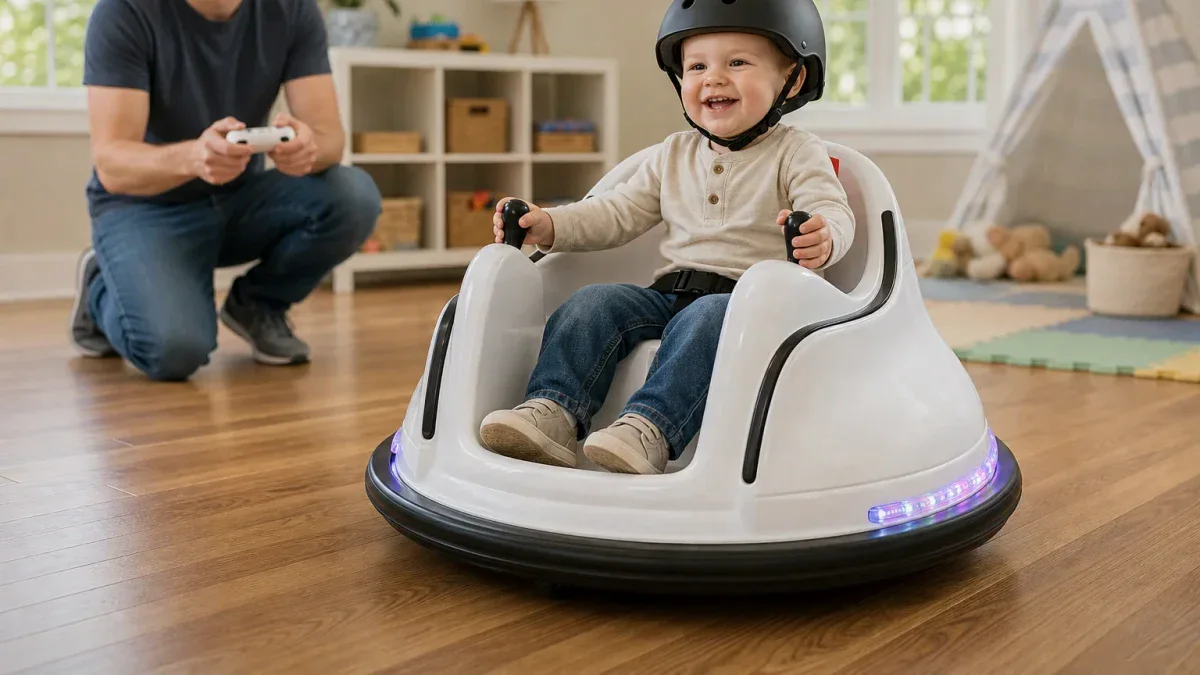
Shopping for a ride-on car for a 1-year-old is a different exercise than shopping for one for a 3-year-old. The priorities shift entirely. Speed becomes a liability. A parental remote stops being a nice-to-have and becomes the point. The question isn't "will they love it" — they will, because everything is fascinating at 12 months — it's whether the vehicle is safe for a child who can steer approximately zero percent of the time and has no concept of why driving into the porch is a problem.
The most important thing to understand: at 1 year old, a parental remote control is not optional. This is not a feature to weigh against Bluetooth speakers or scissor doors. A 12–18 month old cannot reliably steer away from hazards, and a 6V car at 2 mph reaching a step, a slope, or a pool fence is still a serious safety concern. Every ride-on toy we recommend for this age either includes a working parental override or is a non-powered push/ride-on hybrid where the parent is in full control anyway.
6V Is the Maximum. No Exceptions.
Some parents see a 12V model with a "low speed" setting and assume that makes it fine for a baby. It doesn't. A 12V on low still hits 2.5–3 mph, which is faster than a toddler's reflexes can compensate for and more motor torque than a 20-pound child can safely manage if the vehicle tips or catches. 6V models cap out at 1–2 mph, which is the right ceiling for the first 12–18 months of driving. If they're still using the vehicle at 2.5–3 years old and clearly able to control it, you can revisit the 12V question then.
Push/Ride-On Hybrids for the Youngest Riders
For children at the very early end of the age range — 9 to 14 months, newly walking, still wobbly — a push car with a parent-operated stick or a battery-powered car with a parental remote is usually more practical than a self-powered ride-on. Push cars are designed for children who want to sit in something exciting without needing any motor at all. You push; they sit; everyone wins. The battery-powered options step in once the child is old enough to engage with the foot pedal concept — usually around 18 months, though every child is different.
What to Prioritize at This Age
Stability comes first — four wide-set wheels, a low center of gravity, and no tipping risk. Speed control comes second — 6V, one speed, no "high setting" to accidentally activate. Parental override comes third — a 2.4GHz remote with genuine stop-and-steer capability, not just a horn button. Everything else — sound effects, LED lights, storage compartments — is pure bonus.
Quick Comparison
Hape Wonder Wheels Baby Pushride
Hape
Best for Youngest Babies
- Voltage
- 0V (push)
- Seats
- 1
- Ages
- 1–3
- Price
- $50–$80
Fisher-Price Laugh & Learn Smart Stages Ride-On
Fisher-Price
Best Push Hybrid
- Voltage
- 0V (push)
- Seats
- 1
- Ages
- 1–3
- Price
- $45–$70
Best Choice Products 6V Kids Ride-On Car with Remote
Best Choice Products
Best Budget 6V with Remote
- Voltage
- 6V
- Seats
- 1
- Ages
- 1–3
- Price
- $80–$120
Little Tikes Jett Car Ride-On with Remote
Little Tikes
Best 6V Mid-Range
- Voltage
- 6V
- Seats
- 1
- Ages
- 1–3
- Price
- $100–$150
Rollplay Mini Moov Ride-On
Rollplay
Best Premium 6V Option
- Voltage
- 6V
- Seats
- 1
- Ages
- 1–3
- Price
- $130–$180
| Product | Best For | Specs | Price | Rating |
|---|---|---|---|---|
Hape Wonder Wheels Baby Pushride Hape | Best for Youngest Babies | 0V (push) · 1 seat Ages 1–3 | $50–$80 | 4.4 |
Fisher-Price Laugh & Learn Smart Stages Ride-On Fisher-Price | Best Push Hybrid | 0V (push) · 1 seat Ages 1–3 | $45–$70 | 4.3 |
Best Choice Products 6V Kids Ride-On Car with Remote Best Choice Products | Best Budget 6V with Remote | 6V · 1 seat Ages 1–3 | $80–$120 | 4.0 |
Little Tikes Jett Car Ride-On with Remote Little Tikes | Best 6V Mid-Range | 6V · 1 seat Ages 1–3 | $100–$150 | 4.2 |
Rollplay Mini Moov Ride-On Rollplay | Best Premium 6V Option | 6V · 1 seat Ages 1–3 | $130–$180 | 4.3 |
Prices are approximate and subject to change. Always verify current pricing before purchasing.
Our Picks — In Detail
Hape Wonder Wheels Baby Pushride
Hape
0V (push)Seats
1Ages
1–3Price
$50–$80
No motor, no battery, no charging — just a wide-based, colorful seat your baby sits in while you push. For children at the 9–14 month mark who are still figuring out how legs work, this is the right call. The low-to-the-ground design and four spread wheels make it almost impossible to tip, and the bright colors are immediately appealing. A practical, safe introduction to the concept of sitting in a vehicle before any self-propulsion enters the picture.
Pros
- No motor means zero speed risk for the youngest riders
- Wide stance makes tipping essentially impossible
- No charging or battery maintenance required
- Lightweight and easy to move indoors or out
Cons
- Requires an adult to push — no independent movement
- Outgrown quickly as child gains mobility
Fisher-Price Laugh & Learn Smart Stages Ride-On
Fisher-Price
0V (push)Seats
1Ages
1–3Price
$45–$70
Fisher-Price's answer to the push-car category: battery-powered lights and sounds, a steering wheel with buttons, and a sturdy base your 1-year-old can sit on while you push from behind. The 'Smart Stages' sound effects grow with the child through different learning modes. No risk of runaway speed because there's no drive motor. The learning content keeps it interesting longer than a purely silent push toy.
Pros
- Interactive sounds and lights engage babies without motor risk
- Parent pushes from behind — full speed control
- Durable Fisher-Price build for this age range
- Learning content extends useful life of the toy
Cons
- Requires AA batteries for sound features (not included)
- No self-propulsion — entirely parent-driven
Best Choice Products 6V Kids Ride-On Car with Remote
Best Choice Products
6VSeats
1Ages
1–3Price
$80–$120
A 6V battery-powered car with a 2.4GHz parental override remote, aimed at the budget end of the 1–3 year old market. The foot pedal is simple enough for toddlers to grasp, the single forward speed stays under 2 mph, and the remote gives parents genuine stop-and-go control. Build quality is lighter than name brands, which matters less when the driver weighs 22 pounds and the vehicle barely reaches walking pace.
Pros
- Parental 2.4GHz remote with full override control
- 6V speed stays safely under 2 mph
- Foot pedal introduces basic cause-and-effect
- Budget-friendly price reduces the risk of an outgrown purchase
Cons
- Lighter construction than branded alternatives
- Battery run time roughly 40–50 minutes per charge
Little Tikes Jett Car Ride-On with Remote
Little Tikes
6VSeats
1Ages
1–3Price
$100–$150
Little Tikes has been making kid-proof plastic vehicles since 1970, and the Jett Car inherits that reputation for durability. The 6V motor is capped at 2.5 mph, the parental remote connects via 2.4GHz for reliable control, and the build quality is noticeably more solid than budget brands. This is the right choice if you want something that'll survive not just your current 1-year-old but potentially a younger sibling two years from now.
Pros
- Excellent build quality for the price point
- Parental remote range up to 20 feet
- 6V single-speed design appropriate for 1-year-olds
- Brand with proven track record in toddler vehicles
Cons
- No reverse function on most configurations
- Limited styling options compared to licensed models
Rollplay Mini Moov Ride-On
Rollplay
6VSeats
1Ages
1–3Price
$130–$180
Rollplay sits a tier above budget brands in build quality. The Mini Moov's parental remote provides full directional override — the parent takes full directional control, not just stop-and-start. The compact footprint suits indoor use better than most ride-ons. For parents who want something more solid than budget options but aren't ready for a name-brand 12V, this is a credible middle-ground choice.
Pros
- Parental remote provides full directional override
- Compact size works better indoors than most ride-ons
- Above-average build quality for the 6V price range
- Smooth, quiet motor appropriate for indoor use
Cons
- Higher price than comparable 6V models
- Smaller size means outgrown faster
What to Look For
Voltage (6V / 12V / 24V)
Higher voltage means more power, higher top speed, and better terrain handling. Choose based on your child's age, size, and where they'll ride. 12V is the most popular choice for ages 3–7.
Number of Seats
Single-seat models work for one child; two-seat designs are great for siblings or friends. Two-seaters often put more strain on the motor, so look for adequate power.
Terrain
Most 12V ride-ons handle flat grass and hard surfaces. If you have hills, rough grass, or gravel, look for 24V models with high-traction tires.
Safety Features
Look for seat belts, parental lockout switches, low/high speed settings, and parental remote controls — especially for younger or first-time riders.
Battery & Charging
Check battery life (usually 1–2 hours for 12V) and charge time (8–18 hours). Some premium models offer faster charging or higher-capacity batteries.