Ryder Toys Ride-Ons: An Honest Brand Review
Is Ryder Toys any good? An honest review of the direct-to-consumer 24V brand — where the value pricing is real, where the durability record is thin, and how their UTVs stack up against Peg Perego and Huffy.
Affiliate Disclosure
This page contains affiliate links. As an Amazon Associate, PowerWheels HQ may earn a commission on qualifying purchases at no extra cost to you. Our reviews and recommendations are editorially independent.
ryder toys ride-ons verdict: 24V UTV 2-Seater with Remote. It leads this guide as the flagship value play — 24v, two seats, remote, suspension with a 4.2/5 rating. The full comparison and the tradeoffs are below.
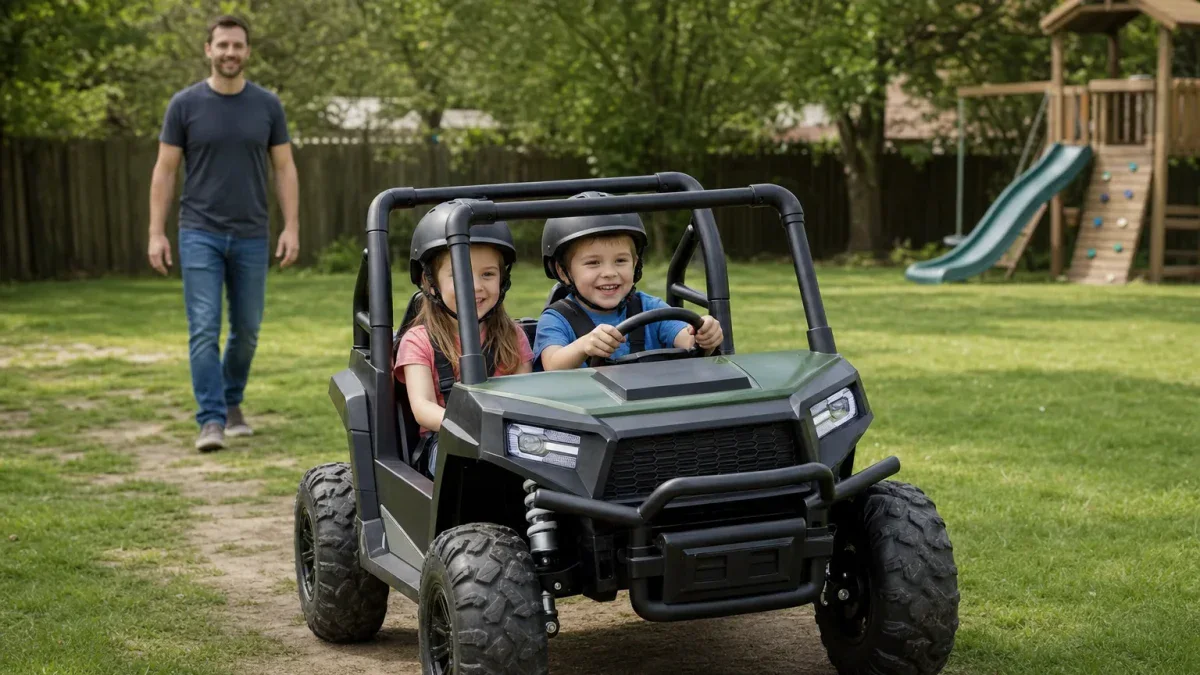
Here is the short version: Ryder Toys sells the most aggressive spec-per-dollar in the 24V ride-on market, and it is a young direct-to-consumer brand whose long-term durability record is thinner than the established names. Both things are true, and which one matters more depends on how you buy.
The value proposition first, because it is genuinely striking. Ryder's core products are 24V two-seater UTVs and trucks with parental remotes, spring suspension, EVA or rubber-tread tires, leather-look seats, and Bluetooth — feature lists that read like a Peg Perego Polaris at prices closer to what Peg Perego charges for its 12V line. On paper, nobody in the category beats them on specs at the price.
What Ryder Toys Actually Is
Ryder is a direct-to-consumer brand: they sell primarily through their own site and marketplaces rather than sitting on Target shelves next to Power Wheels. Like nearly every ride-on at every price — including most Kid Trax and plenty of what wears bigger logos — the vehicles are manufactured in China. That is not a knock; it is the category. What DTC means for you practically: no walking a broken vehicle back to a big-box customer service desk. Your warranty experience is the brand's customer service department, full stop.
The Honest Part
And that customer service record is mixed. Owner reports cluster into two camps: buyers whose vehicles arrived fine and have run for a season or more with zero complaints, and buyers who hit a defect — a dead motor, a controller fault, a missing hardware bag — and found the parts-and-support process slower and more frustrating than they expected. Peg Perego has spent decades building a parts network where you can order a replacement gearbox for a ten-year-old Gator. Ryder has existed for a fraction of that time. There is simply less evidence about what these vehicles look like in year three, because not many of them have been around that long.
So the honest framing is this: you are trading a longer proven-durability record for a materially better spec sheet at the price. That is a rational trade for plenty of families. It is the wrong trade if you want a vehicle that survives two kids and a decade in the garage — that is Peg Perego territory, and you pay Peg Perego prices for it.
Who the Value Math Works For
Ryder makes the most sense when your kid is 4-7, you want real 24V power and two seats, and the Peg Perego equivalent is out of budget. A 24V Ryder UTV at a mid-tier price gets you speed and terrain ability that no 12V vehicle at the same price can touch. If it runs well for two or three seasons — which is the typical window before a kid outgrows it anyway — the math worked, even if it would not have survived a decade.
How to Buy One Intelligently
Three rules. First, test everything within the return window — every speed, the remote, reverse, lights, a full battery cycle. Most serious defects show up immediately, and immediately is when your return rights are strongest. Second, keep the box for that window. Third, treat the battery right from day one: full charge before first use, recharge after every session, top up monthly in the off-season. A neglected battery is the number one killer of budget ride-ons, and it is the one failure that is entirely on you.
The Comparison That Matters
Below, Ryder's popular models sit next to the vehicles they are actually cross-shopped against: the Peg Perego Polaris RZR 900, the Huffy Torex 24V UTV, and the best-known budget 24V alternative. The spec gaps and the price gaps tell the story better than any brand copy does.
Quick Comparison
24V UTV 2-Seater with Remote
Ryder Toys
The flagship value play — 24V, two seats, remote, suspension
- Voltage
- 24V
- Seats
- 2
- Ages
- 3-8 years
- Price
- $350-$450
24V Off-Road Truck 2-Seater
Ryder Toys
Same value formula in a pickup body
- Voltage
- 24V
- Seats
- 2
- Ages
- 3-8 years
- Price
- $350-$480
Polaris RZR 900
Peg Perego
The established alternative — less voltage, far deeper track record
- Voltage
- 12V
- Seats
- 2
- Ages
- 3-8 years
- Price
- $430-$550
Torex 24V UTV
Huffy
The big-box 24V — retail support with real 24V performance
- Voltage
- 24V
- Seats
- 2
- Ages
- 3-8 years
- Price
- $400-$500
24V UTV Ride-On
Best Choice Products
The budget floor of the 24V two-seater market
- Voltage
- 24V
- Seats
- 2
- Ages
- 3-8 years
- Price
- $300-$400
| Product | Best For | Specs | Price | Rating |
|---|---|---|---|---|
24V UTV 2-Seater with Remote Ryder Toys | The flagship value play — 24V, two seats, remote, suspension | 24V · 2 seats Ages 3-8 years | $350-$450 | 4.2 |
24V Off-Road Truck 2-Seater Ryder Toys | Same value formula in a pickup body | 24V · 2 seats Ages 3-8 years | $350-$480 | 4.1 |
Polaris RZR 900 Peg Perego | The established alternative — less voltage, far deeper track record | 12V · 2 seats Ages 3-8 years | $430-$550 | 4.5 |
Torex 24V UTV Huffy | The big-box 24V — retail support with real 24V performance | 24V · 2 seats Ages 3-8 years | $400-$500 | 4.3 |
24V UTV Ride-On Best Choice Products | The budget floor of the 24V two-seater market | 24V · 2 seats Ages 3-8 years | $300-$400 | 4.0 |
Prices are approximate and subject to change. Always verify current pricing before purchasing.
Our Picks — In Detail
24V UTV 2-Seater with Remote
Ryder Toys
24VSeats
2Ages
3-8 yearsPrice
$350-$450
This is the vehicle the brand is built on: a two-seat UTV with 24V power, spring suspension, treaded tires, parental remote, and Bluetooth at a price where the big names sell 12V. Speed and feature set punch well above the price. The unknown is year three.
Pros
- 24V performance and two seats at a 12V competitor price
- Parental remote and multiple speed settings standard
- Suspension and treaded tires handle grass better than budget rivals
Cons
- Young brand — long-term durability record is thin
- Customer service and parts reports are mixed
24V Off-Road Truck 2-Seater
Ryder Toys
24VSeats
2Ages
3-8 yearsPrice
$350-$480
The truck-body version of the same pitch: 24V drivetrain, two seats, remote, working lights, and media features. If your kid wants a truck rather than a side-by-side, this is the Ryder to look at — same strengths, same caveats.
Pros
- Full 24V feature set carried over from the UTV
- Truck styling with working LED lights kids respond to
- Consistently undercuts name-brand 24V trucks on price
Cons
- Plastic body panels feel thinner than Power Wheels equivalents
- Assembly instructions are a known weak point
Polaris RZR 900
Peg Perego
12VSeats
2Ages
3-8 yearsPrice
$430-$550
The uncomfortable comparison for the value math: the RZR 900 is 12V and costs more than Ryder's 24V UTV. What you get for that is Peg Perego's motors, decades of proven durability, and a parts network that will still exist when your second kid inherits it.
Pros
- Peg Perego build quality and motor reliability are the category benchmark
- Replacement parts available for essentially the vehicle's whole life
- Strong resale value holds the real cost down
Cons
- 12V — measurably slower and weaker on hills than 24V rivals
- Costs more than competitors offering double the voltage
Torex 24V UTV
Huffy
24VSeats
2Ages
3-8 yearsPrice
$400-$500
Huffy's Torex UTV is the closest spec rival to Ryder's flagship with one structural difference: Huffy is a century-old company sold through major retailers, so returns and support run through channels you already know. You pay modestly more for that safety net.
Pros
- True 24V performance with strong grass and gravel capability
- Big-box retail availability simplifies returns and warranty issues
- Established brand with a real support infrastructure
Cons
- Heavier and bulkier than most rivals — moving it is a two-adult job
- Fewer comfort features than Ryder at a similar or higher price
24V UTV Ride-On
Best Choice Products
24VSeats
2Ages
3-8 yearsPrice
$300-$400
Best Choice Products plays the same value game as Ryder with an even lower price and an even simpler feature set. It is the floor of the segment — fine hardware for flat driveways, but suspension, tire quality, and seat comfort all show the cost cutting.
Pros
- Cheapest path to a 24V two-seater
- Simple design means fewer features that can fail
- Large sales volume means plentiful owner reviews to check
Cons
- Hard plastic tires undercut the 24V terrain advantage
- Bare-bones suspension transmits every bump to the riders
What to Look For
Voltage (6V / 12V / 24V)
Higher voltage means more power, higher top speed, and better terrain handling. Choose based on your child's age, size, and where they'll ride. 12V is the most popular choice for ages 3–7.
Number of Seats
Single-seat models work for one child; two-seat designs are great for siblings or friends. Two-seaters often put more strain on the motor, so look for adequate power.
Terrain
Most 12V ride-ons handle flat grass and hard surfaces. If you have hills, rough grass, or gravel, look for 24V models with high-traction tires.
Safety Features
Look for seat belts, parental lockout switches, low/high speed settings, and parental remote controls — especially for younger or first-time riders.
Battery & Charging
Check battery life (usually 1–2 hours for 12V) and charge time (8–18 hours). Some premium models offer faster charging or higher-capacity batteries.