Indoor vs. Outdoor Ride-On Toys: What's the Difference?
Can ride-on toys be used indoors? We explain which models work best inside vs. outside, what to look for in each use case, and what to avoid.
Affiliate Disclosure
This page contains affiliate links. As an Amazon Associate, PowerWheels HQ may earn a commission on qualifying purchases at no extra cost to you. Our reviews and recommendations are editorially independent.
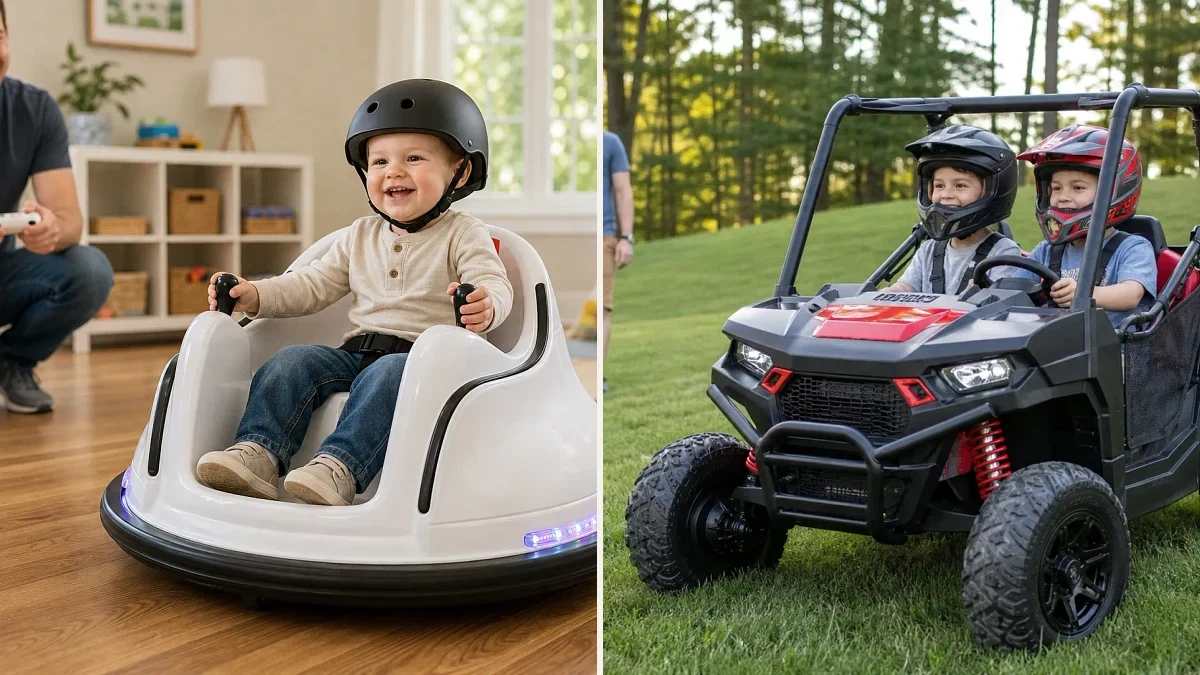
The question of whether a ride-on toy works indoors usually gets answered the first time someone drives it across hardwood floors at full speed and turns left into the baseboard. The answer, in those cases, turns out to be "technically yes, but not like that."
Most ride-on toys are designed for outdoor use. The tires are sized for grass, the turning radius assumes a yard, and the speed settings are calibrated for children who have room to maneuver. None of that makes indoor use impossible — it makes it a different calculation.
What changes indoors:
Traction is the primary variable. Plastic wheels, common on most 12V models, grip smooth indoor surfaces reasonably well — sometimes better than they grip wet grass. Rubber tires, found on Peg Perego and premium models, also work on smooth indoor surfaces but can mark light-colored floors. Knobby tires designed for off-road grip are the ones that scuff hardwood.
Space is the second variable. The turning radius on a two-seat ride-on like the Jeep Wrangler or Dune Racer Extreme assumes outdoor space. In a living room, you're executing 3-point turns around furniture. Smaller single-seat models and especially push cars navigate indoor spaces better.
Speed matters differently indoors. The low setting (2.5 mph) that seems overly cautious outdoors is entirely appropriate indoors, where the wall is six feet away instead of sixty.
What works well indoors:
Push cars and low-powered 6V models on low settings. Smaller single-seat vehicles. Any model with smooth or lightly textured wheels rather than aggressive tread. And critically: any vehicle small enough that the child can stop before reaching the kitchen.
What to avoid indoors:
Open-frame buggies (debris collection is pointless indoors and the footprint is large). Knobby off-road tires on hardwood or tile. High-speed settings. Anything 24V at more than the minimum speed setting.
Quick Comparison
Best Choice Products Police Car (12V)
Best Choice Products
Best for Indoor/Outdoor Flex
- Voltage
- 12V
- Seats
- 1
- Ages
- 2–6
- Price
- $90–$140
Kid Trax Dodge Viper SRT (6V)
Kid Trax
Best for Indoors
- Voltage
- 6V
- Seats
- 1
- Ages
- 2–5
- Price
- $80–$130
Power Wheels Jeep Wrangler (12V)
Power Wheels
Best for Outdoor, Occasional Indoor
- Voltage
- 12V
- Seats
- 2
- Ages
- 3–7
- Price
- $230–$320
| Product | Best For | Specs | Price | Rating |
|---|---|---|---|---|
Best Choice Products Police Car (12V) Best Choice Products | Best for Indoor/Outdoor Flex | 12V · 1 seat Ages 2–6 | $90–$140 | 3.9 |
Kid Trax Dodge Viper SRT (6V) Kid Trax | Best for Indoors | 6V · 1 seat Ages 2–5 | $80–$130 | 3.9 |
Power Wheels Jeep Wrangler (12V) Power Wheels | Best for Outdoor, Occasional Indoor | 12V · 2 seats Ages 3–7 | $230–$320 | 4.4 |
Prices are approximate and subject to change. Always verify current pricing before purchasing.
Our Picks — In Detail
Best Choice Products Police Car (12V)
Best Choice Products
12VSeats
1Ages
2–6Price
$90–$140
Smooth plastic wheels, compact single-seat footprint, parental remote. The combination makes this one of the better models for mixed indoor/outdoor use. Smooth wheels don't damage floors, the single seat keeps the footprint manageable, and the parental remote means you control the speed indoors without negotiating with a 3-year-old about why the kitchen is off-limits. The siren will absolutely work indoors. This is the known risk.
Pros
- Smooth plastic wheels work on hard floors
- Compact single-seat footprint
- Parental remote for indoor speed control
- Manageable at low speed indoors
Cons
- Siren is fully operational indoors (cannot be emphasized enough)
- 12V speed still needs low setting indoors
- Not suitable for carpet — wheels spin
Kid Trax Dodge Viper SRT (6V)
Kid Trax
6VSeats
1Ages
2–5Price
$80–$130
The 6V tier is the most indoor-appropriate category: 2 mph maximum speed, lightweight, single seat, smooth plastic wheels. The Viper's low profile and compact footprint make it navigable in typical living room space without requiring a 5-point turn to change direction. For families in apartments, townhouses, or anywhere with a smaller interior footprint, a 6V model is often the only realistic option.
Pros
- 2 mph is safe and manageable indoors
- Lightweight — easy to redirect or remove
- Small footprint navigates interior spaces
- Smooth plastic wheels don't mark floors
Cons
- Strictly smooth hard floors — no carpet
- Very limited turning radius still requires space
- Outgrown quickly
Power Wheels Jeep Wrangler (12V)
Power Wheels
12VSeats
2Ages
3–7Price
$230–$320
Primarily an outdoor vehicle that can be used on low speed on smooth hard floors in limited spaces. The two-seat width (about 25 inches) makes tight indoor navigation difficult — it's manageable in a large open space but not ideal in a typical room. Smooth plastic wheels work on hard floors without damage. The honest answer: this is an outdoor vehicle that happens to function indoors on low speed in a pinch. It's not an indoor vehicle that also goes outside.
Pros
- Works on hard floors on low speed
- Smooth wheels don't damage flooring
- Best option if indoor use is occasional rather than primary
Cons
- Wide two-seat design limits indoor maneuverability
- Designed for outdoor use first
- No parental remote to limit indoor speed
What to Look For
Voltage (6V / 12V / 24V)
Higher voltage means more power, higher top speed, and better terrain handling. Choose based on your child's age, size, and where they'll ride. 12V is the most popular choice for ages 3–7.
Number of Seats
Single-seat models work for one child; two-seat designs are great for siblings or friends. Two-seaters often put more strain on the motor, so look for adequate power.
Terrain
Most 12V ride-ons handle flat grass and hard surfaces. If you have hills, rough grass, or gravel, look for 24V models with high-traction tires.
Safety Features
Look for seat belts, parental lockout switches, low/high speed settings, and parental remote controls — especially for younger or first-time riders.
Battery & Charging
Check battery life (usually 1–2 hours for 12V) and charge time (8–18 hours). Some premium models offer faster charging or higher-capacity batteries.