Power Wheels Battery Guide: Replacement, Maintenance & Upgrade
Everything you need to know about Power Wheels batteries — how long they last, when to replace them, OEM vs aftermarket options, and the 12V-to-24V upgrade question.
Affiliate Disclosure
This page contains affiliate links. As an Amazon Associate, PowerWheels HQ may earn a commission on qualifying purchases at no extra cost to you. Our reviews and recommendations are editorially independent.
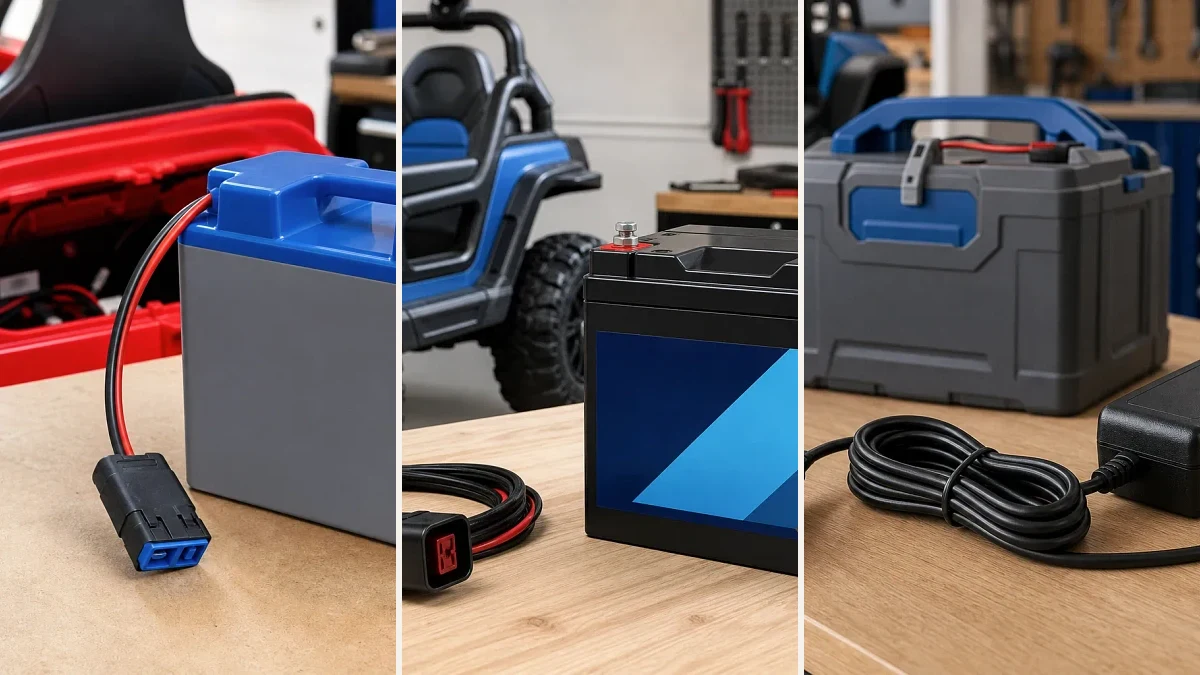
Most Power Wheels problems are battery problems. The motor is usually fine. The wiring is usually fine. What's dead, weak, or refusing to charge is almost always the battery — and once you understand how these batteries work and why they fail, most issues become straightforward to diagnose and fix.
Power Wheels uses sealed lead-acid (SLA) batteries in the 6V, 12V, and 24V range. These batteries are inexpensive to manufacture, safe, and reasonably robust — but they have a specific weakness: deep discharge. If you run a Power Wheels battery all the way down and then leave it uncharged for days or weeks, you will shorten its lifespan significantly. This is the single most common reason batteries fail prematurely, and it's entirely preventable.
The good news is that replacement batteries are widely available and reasonably priced. The OEM Fisher-Price batteries are reliable but carry a premium. Universal aftermarket SLA batteries work well if you match the voltage and amp-hour (Ah) rating exactly. Lithium upgrades are also an option for parents who want longer run time and less maintenance, though they require a compatible charger and aren't always a plug-and-play swap.
This guide covers the decisions you actually face: How do you know when the battery is failing versus the charger? Should you buy OEM or go aftermarket? Is a 24V upgrade safe? And how do you store the battery so it survives a full winter in the garage?
Quick Comparison
Fisher-Price Power Wheels 12V OEM Replacement Battery
Fisher-Price
Best for Guaranteed Compatibility
- Voltage
- 12V
- Seats
- N/A
- Ages
- N/A
- Price
- $35–$55
Universal 12V 9Ah Aftermarket SLA Battery
ExpertPower / UPG / Chrome Battery
Best Value Replacement
- Voltage
- 12V
- Seats
- N/A
- Ages
- N/A
- Price
- $20–$35
12V Lithium LiFePO4 Upgrade Battery
Dakota Lithium / Eco-Worthy
Best for Longer Run Time
- Voltage
- 12V
- Seats
- N/A
- Ages
- N/A
- Price
- $60–$120
Fisher-Price Power Wheels 24V OEM Battery
Fisher-Price
Best for 24V OEM Vehicles
- Voltage
- 24V
- Seats
- N/A
- Ages
- N/A
- Price
- $60–$85
Universal 24V Aftermarket SLA Battery Pack
Chrome Battery / UPG
Best Budget 24V Replacement
- Voltage
- 24V
- Seats
- N/A
- Ages
- N/A
- Price
- $45–$70
| Product | Best For | Specs | Price | Rating |
|---|---|---|---|---|
Fisher-Price Power Wheels 12V OEM Replacement Battery Fisher-Price | Best for Guaranteed Compatibility | 12V · N/A seats Ages N/A | $35–$55 | 4.3 |
Universal 12V 9Ah Aftermarket SLA Battery ExpertPower / UPG / Chrome Battery | Best Value Replacement | 12V · N/A seats Ages N/A | $20–$35 | 4.1 |
12V Lithium LiFePO4 Upgrade Battery Dakota Lithium / Eco-Worthy | Best for Longer Run Time | 12V · N/A seats Ages N/A | $60–$120 | 4.4 |
Fisher-Price Power Wheels 24V OEM Battery Fisher-Price | Best for 24V OEM Vehicles | 24V · N/A seats Ages N/A | $60–$85 | 4.2 |
Universal 24V Aftermarket SLA Battery Pack Chrome Battery / UPG | Best Budget 24V Replacement | 24V · N/A seats Ages N/A | $45–$70 | 4.0 |
Prices are approximate and subject to change. Always verify current pricing before purchasing.
Our Picks — In Detail
Fisher-Price Power Wheels 12V OEM Replacement Battery
Fisher-Price
12VSeats
N/AAges
N/APrice
$35–$55
The OEM Fisher-Price 12V battery is the safest choice when you want guaranteed fit with no guesswork. It's the same battery your vehicle shipped with, rated to the same amp-hour spec, and compatible with the original charger. You pay a slight premium over aftermarket options, but you eliminate compatibility questions entirely.
Pros
- Guaranteed compatibility with OEM charger and vehicle wiring
- No amp-hour or connector guesswork
- Backed by Fisher-Price warranty
Cons
- More expensive than equivalent aftermarket SLA batteries
- Same lead-acid lifespan limitations as the original
Universal 12V 9Ah Aftermarket SLA Battery
ExpertPower / UPG / Chrome Battery
12VSeats
N/AAges
N/APrice
$20–$35
Universal 12V sealed lead-acid batteries from brands like ExpertPower and UPG match the OEM spec at roughly half the cost. Verify the amp-hour rating matches (most Power Wheels 12V batteries are 9Ah) and confirm the connector type before ordering. Performance is comparable to OEM for the first 1–2 years.
Pros
- Significantly cheaper than OEM pricing
- Widely available with fast shipping
- Works with original Power Wheels charger
Cons
- Connector may need an adapter depending on vehicle model
- Quality varies — stick to known brands
12V Lithium LiFePO4 Upgrade Battery
Dakota Lithium / Eco-Worthy
12VSeats
N/AAges
N/APrice
$60–$120
A lithium iron phosphate (LiFePO4) battery at 12V offers 2–3x the cycle life of an SLA battery and typically delivers more usable capacity per charge. Run times improve noticeably, and the battery holds charge better during storage. The trade-off: higher upfront cost and you'll need a lithium-compatible charger — the OEM lead-acid charger will not properly charge a lithium cell.
Pros
- 2–3x longer cycle life than lead-acid
- Better run time per charge and improved storage performance
- Lighter weight than equivalent SLA
Cons
- Requires a lithium-compatible charger — OEM charger will not work correctly
- Higher upfront cost; takes 2–3 years to break even over SLA
Fisher-Price Power Wheels 24V OEM Battery
Fisher-Price
24VSeats
N/AAges
N/APrice
$60–$85
For vehicles that shipped with a 24V system, the OEM 24V battery is the correct replacement. Do not substitute a pair of 12V batteries wired in series unless you're confident in the wiring — the OEM pack is designed and tested for the vehicle's electronics.
Pros
- Correct replacement for all factory 24V Power Wheels vehicles
- No wiring modifications required
- Sized and shaped to fit OEM battery tray
Cons
- Expensive for a lead-acid battery
- Heavy — removal for indoor charging requires effort
Universal 24V Aftermarket SLA Battery Pack
Chrome Battery / UPG
24VSeats
N/AAges
N/APrice
$45–$70
Universal 24V SLA packs are typically two 12V cells in a single housing, priced below OEM. They work well when voltage and connector type match the original battery exactly. As with 12V aftermarket options, stick to reputable brands and double-check the amp-hour rating.
Pros
- Meaningful savings over OEM 24V pricing
- Compatible with OEM 24V charger when properly matched
- Available from multiple suppliers
Cons
- Must verify connector type carefully — mismatches are common
- Budget brands show wider quality variation at 24V
What to Look For
Voltage (6V / 12V / 24V)
Higher voltage means more power, higher top speed, and better terrain handling. Choose based on your child's age, size, and where they'll ride. 12V is the most popular choice for ages 3–7.
Number of Seats
Single-seat models work for one child; two-seat designs are great for siblings or friends. Two-seaters often put more strain on the motor, so look for adequate power.
Terrain
Most 12V ride-ons handle flat grass and hard surfaces. If you have hills, rough grass, or gravel, look for 24V models with high-traction tires.
Safety Features
Look for seat belts, parental lockout switches, low/high speed settings, and parental remote controls — especially for younger or first-time riders.
Battery & Charging
Check battery life (usually 1–2 hours for 12V) and charge time (8–18 hours). Some premium models offer faster charging or higher-capacity batteries.